


Our History
From Radio to Digital: The Evolution of
Broadcast Technology
For over a century, broadcast engineers have pushed the boundaries of how we share information, entertainment, and culture. From the early days of radio in the 1920s through the advent of television, FM, satellites, and HDTV, the IEEE Broadcast Technology Society chronicles the innovations that have shaped global media. This retrospective highlights the pivotal breakthroughs, the engineers behind them, and the relentless drive toward tomorrow’s broadcasting landscape.

1920-1940
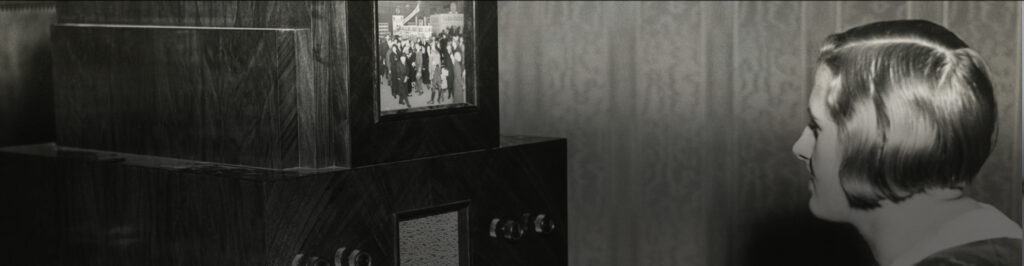
In 1998, the IEEE Broadcast Technology Society celebrated its 50th anniversary. The second oldest technical society (the group that became today’s Signal Processing Society is slightly older) has a history that stretches to the formation of the Institute of Radio Engineers in 1912. This exhibit highlights just a few of the many accomplishments of broadcast engineers. Sponsored by the IEEE Broadcast Technology Society and the IEEE History Center.

The Society: Radio Engineers and the IRE
The engineers who formed the core of the original Institute of Radio Engineers in the 1920s and 1930s were mostly from the broadcast industry. For about the first 30 years of its existence, “radio” was virtually synonymous with “broadcasting.” But the years after World War II brought drastic changes to the field of electrical engineering. Electrical technology was moving rapidly; radar, computers, television, solid-state electronics, and space exploration were burgeoning fields.

Radio
Radio broadcasting emerged in the first decade of the 20th century and flowered in the United States and Europe during the 1920s. By the 1930s, virtually every country in the world had a network of radio stations, and broadcasting engineers were in demand. The World War II years saw a considerable expansion in the use of broadcasting, as the U.S. and other nations established new networks to serve the entertainment and information needs of the military.
Overflow Item
Lorem…Radio broadcasting emerged in the first decade of the 20th century and flowered in the United States and Europe during the 1920s. By the 1930s, virtually every country in the world had a network of radio stations, and broadcasting engineers were in demand. The World War II years saw a considerable expansion in the use of broadcasting, as the U.S. and other nations established new networks to serve the entertainment and information needs of the military.
Careers
Job openings, resources, and networking opportunities.
Resource Center
Your source for expert insights and tools in broadcast technology.
Join Now
Exclusive access to broadcast insights, events, and a global network.
Stay Connected

Get Involved